What is medical chronology software?
Medical chronology software turns a clinical negligence bundle into a dated chronology with every entry cited to its source page. What it does, what to look for when choosing it, and how Plexo Legal builds one in under an hour.
Medical chronology software reads a claimant's medical records and turns them into a dated chronology of every consultation, test, treatment and outcome, with each entry linked back to the page it came from. In clinical negligence, it replaces the days a fee earner or paralegal spends sorting GP notes, hospital records and letters into order, so the case can be judged on the evidence sooner. The best systems also flag where the records contradict each other or have gaps, and leave every entry for a lawyer to check and approve.
I built Plexo Legal, our case analysis software for claimant law firms, around that job. This guide covers what medical chronology software should do, what to look for when you choose it, and how Plexo Legal takes a clinical negligence bundle from upload to a cited chronology.
Why every clinical negligence file starts with the chronology
A clinical negligence bundle rarely arrives in order. GP notes, records from one or more hospital trusts, radiology reports, clinic letters and complaint correspondence come in separate batches, often scanned, sometimes handwritten, with duplicates and gaps. Before anyone can judge breach, causation or the date of knowledge, somebody has to put all of it in date order.
That chronology then carries the whole case. It is what the fee earner reads before deciding whether to take the claim on, what the expert is instructed from, and what the letter of claim is built on. If an entry is wrong or a record is missing, every later step inherits the error.
The volume keeps growing. NHS Resolution reported 15,236 new clinical negligence claims and reported incidents in 2025/26, and a record 84% of clinical negligence claims were resolved without formal legal proceedings. Most claims are won, lost or settled on the paperwork, so the quality of the record review shapes the outcome long before a court is involved.
What medical chronology software actually does
Good medical chronology software does six jobs that a person would otherwise do by hand:
- Reads every page. Typed, scanned and handwritten records are turned into text the software can work with. For scans this uses optical character recognition (OCR), which reads the image of a page much as a person would.
- Admits what it cannot read. A page it cannot read with confidence is set aside for a person to check, not guessed.
- Sorts the bundle. Documents are classified, medical records are separated from correspondence and the records are put in date order.
- Builds the chronology. Each consultation, test, treatment and outcome becomes a dated entry.
- Cites every entry. Each entry links to its source page, with the quoted passage highlighted, so anyone can check it in seconds.
- Flags conflicts and gaps. Where two records disagree, or a record that should exist is missing, it says so rather than smoothing it over.
A chronology you cannot check is a liability. A chronology where every line links to its page is evidence.
Why a general AI chatbot is not the same thing
It is tempting to paste records into a general-purpose AI assistant and ask for a summary. For clinical negligence work that creates three problems. First, a summary without page references cannot be checked, so it cannot be relied on in front of an expert or the other side. Second, general tools can state things confidently that are not in the records, and in legal work anything that cannot be traced to a page has to be treated as unverified. Third, medical records are special category health data, and they belong in a system built to keep each firm's data separate, with multi-factor sign-in and a record of who did what.
Purpose-built software works the other way round: every fact must point to a page, anything unproven is flagged, and nothing goes out until a lawyer approves it.
What to look for when choosing medical chronology software
If you are comparing products, these seven tests separate a useful tool from a risky one:
- Page-level citations. Every entry links to the page it came from, with the quote.
- Honesty about handwriting. It reads scans and handwriting, and tells you which pages it could not read.
- Conflicts and gaps flagged. Contradictions between records and missing records are listed, not hidden.
- Usable output. A Word chronology and an ordered records bundle you can send to counsel or an expert.
- Human approval. Every output stays a draft until a lawyer approves it, with an audit trail of who changed what.
- Security fit for health data. Multi-factor sign-in, each firm's data walled off from every other firm, and every action logged.
- More than a chronology. The chronology is the start. The real value is what it lets you decide next.
How Plexo Legal builds a clinical negligence chronology
Plexo Legal's Medical Record Intelligence does each of those jobs across the whole bundle. You drop in the files. It reads every page, including handwriting, sets aside anything it cannot read for a person to check, orders the records, separates them from correspondence and builds a dated chronology with every entry cited to its source page. Conflicts and record gaps are flagged for the fee earner, and the chronology exports to Word alongside an ordered medical records bundle.
These are measured times from production runs in November 2026, mostly on scanned PDFs:
- A 750-page bundle of 37 documents became 856 dated chronology entries, each cited to its source page, in 55 minutes.
- A full case assessment of 253 pages across 43 documents, from upload to outcome, took about 11 minutes.
- A 726-page bundle left to run overnight came back with 849 cited entries, 77 conflicts flagged and 40 record gaps identified.
One claimant firm put it more simply: "A recent bundle took two of our team six days. Plexo Legal processed the same files in under an hour."
What happens after the chronology
The chronology is where Plexo Legal starts, not where it stops. On a clinical negligence file, the same cited record feeds four more tools:
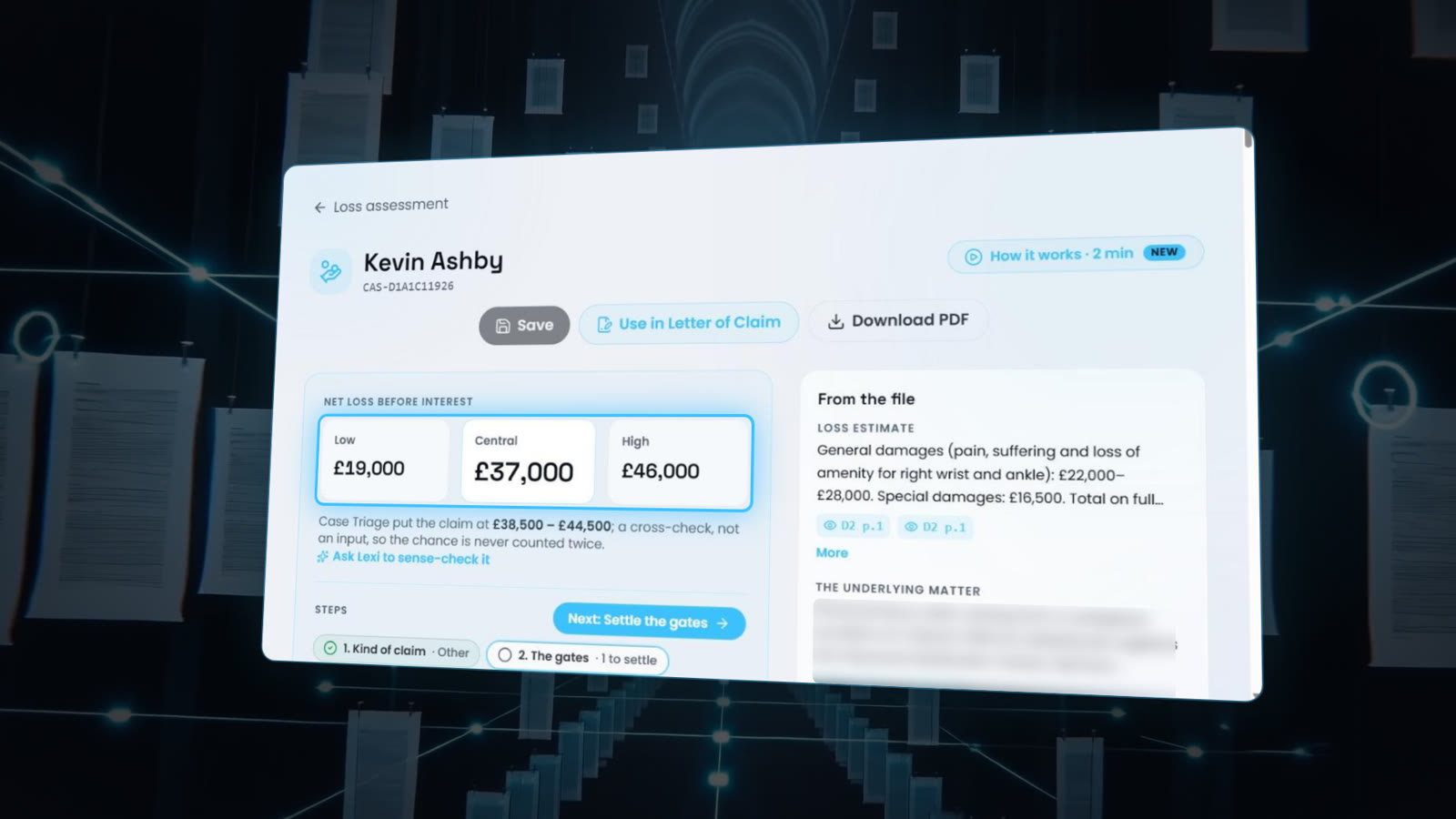
- Case Triage: a prospects band, a recommendation to proceed, investigate or decline, and a valuation range from your firm's own brackets.
- The case against: a second pass that argues the claim the way the defence would, listing what holds, what is vulnerable and what evidence is missing.
- Consent and Candour Audit: the record tested against informed consent and the statutory duty of candour, step by step, with every gap cited.
- NHS settlement benchmarks: the case placed against NHS Resolution's published settlement statistics by value band and clinical specialty, as context for the valuation and never a substitute for it.
Each one has a short walkthrough film on our clinical negligence page, and the full product is on the Plexo Legal page.
Does it replace the fee earner?
No, and it should not try to. The software does the reading, sorting and cross-referencing; the fee earner does the judgement. In practice the time a team used to spend putting records in order goes on the questions that win cases: causation, the right expert and what to tell the client. Every output in Plexo Legal stays a draft until a lawyer approves it.
Frequently asked questions
What is a medical chronology in a clinical negligence claim?
It is a dated list of every relevant medical event in the claimant's records, such as consultations, tests, diagnoses, treatment and outcomes, with each entry referenced to its source page. It is the foundation for judging breach, causation and limitation, and for instructing medical experts.
How long does it take to produce a medical chronology?
By hand, a large bundle can take a fee earner or paralegal several days. With Plexo Legal, a measured 750-page bundle became a fully cited chronology of 856 entries in 55 minutes, and bigger bundles can be left to run overnight.
Can medical chronology software read handwritten records?
Good software reads most handwriting and older scans. Plexo Legal reads handwritten and scanned pages, and any page it cannot read with confidence is set aside for a person to check rather than guessed.
Is it safe to use AI on clinical negligence records?
It can be, if the system is built for health data: multi-factor sign-in, each firm's data kept separate, every action logged, and nothing relied on until a lawyer has checked it. Our security page sets out how Plexo Legal does this.
Medical chronology software earns its place by giving clinical negligence teams back the days they spend sorting records, with a chronology they can trust because every line can be checked. If you want to see it on a bundle like yours, book a live demo and we will build the chronology while you watch.
Sources and references
- 1.NHS Resolution delivers record early resolution of claims as new strategy shows impact(NHS Resolution, 9 July 2026)
Diego builds Plexo Legal, AI case analysis software for UK claimant law firms. He is trained and certified in AI through Google and Anthropic. About Plexo Logic →
See a real bundle analysed, live.
Cited chronologies, case triage and limitation, run on a file while you watch.
Book a live demo